

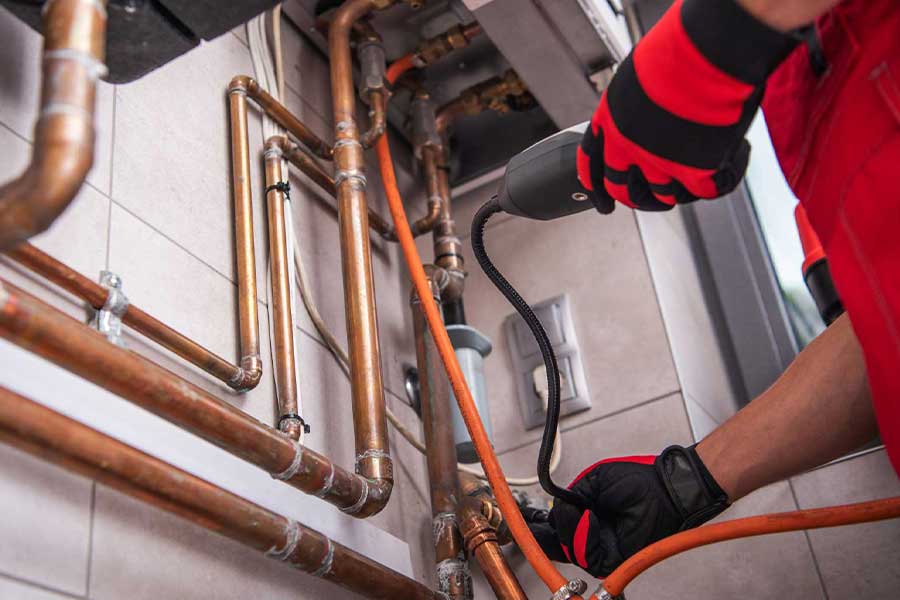
A gas leak gives off five clear warnings. The first three: a sulfur or rotten-egg smell, hissing near a line or appliance, and an unexplained jump in your gas bill. Outdoors, watch for dead vegetation in a healthy spot. Headaches or dizziness at home complete the list. Notice any one, get everyone out, and call for help.
Key Points
- Smell: Sulfur or rotten eggs is the odorant utilities add so leaks are easy to detect.
- Sound: A hiss or whistle near a line or appliance means gas is escaping.
- Outside Clues: Dead vegetation in a healthy area often signals gas seeping into the soil.
- Your Bill: An unexplained rise usually points to a leak you cannot see.
- Your Family: Headaches, dizziness, and nausea can all signal exposure.
What Are the Warning Signs of a Gas Leak?
The most recognizable sign of a gas leak is the smell of sulfur or rotten eggs. Utilities add that odor to natural gas specifically so leaks are easy to detect.
A hissing or whistling sound near a gas line or appliance means gas is escaping. Outdoors, dead or dying vegetation in an otherwise healthy area usually signals gas seeping into the soil.
An unexplained rise in your gas bill often points to a leak you cannot see. Pay attention to your family too, because headaches or dizziness can signal exposure.
When you suspect a leak, get everyone out and call our emergency plumber in Orange, TX. Our team runs around the clock and arrives prepared to inspect the lines and resolve the problem safely.
Why Is a Gas Leak So Dangerous?
A gas leak threatens your home on two fronts at once: fire and your family’s health. Natural gas is highly flammable, so even a small accumulation can ignite from a single spark.
The health risks are just as real. Breathing natural gas causes headaches, dizziness, and nausea, and prolonged exposure leads to more serious problems.
A slow leak is the harder case, because it affects your household quietly over time. Fast, professional gas leak repair is what protects everyone under your roof.
How Do You Safely Check for a Gas Leak?
Rely on your senses first and leave the confirmation to professionals. Open windows and doors to help any gas disperse if you suspect a problem.
Use your ears and your nose. A hiss near an appliance or a sulfur-like odor deserves immediate attention.
Technicians often brush a soapy-water solution onto joints and connections, where bubbles reveal escaping gas. That check belongs with trained hands, not a homeowner.
The rule is simple. Find any sign of one, leave the area, and call a professional. Our team handles the rest with expert gas line repair once the source is confirmed.
What Should You Do If You Suspect a Gas Leak?
Get everyone out of the home first, pets included. Avoid touching electrical devices or switches on the way out, because a spark is all it takes to ignite gas.
Once you are a safe distance away, call your gas company or emergency services to report it. Do not go back in to hunt for the leak yourself.
Stay clear of the building until help arrives. When professionals get there, tell them what you noticed so they can work efficiently.
Can Regular Maintenance Prevent a Gas Leak?
Yes. Scheduled check-ups catch wear on gas lines, fittings, and appliances before any of it becomes a hazard.
Our technicians inspect and test those components, clean and tune the systems that can malfunction, and look for corrosion or damage on the line itself. Then we explain what we found and review your options.
The Railroad Commission of Texas oversees natural gas pipeline safety statewide, including the distribution lines that feed neighborhoods like ours. A routine plumbing inspection covers the part of the system inside your property line.
In the older homes we service around downtown Orange and near the Sabine River, that proactive attention is especially worthwhile.
Keeping Your Orange, TX Home Safe From Gas Leaks
Knowing the signs of a gas leak is like keeping a flashlight handy in a dark room. It gives you the clarity to act before a small issue becomes a serious one.
Stay alert to the smells, the sounds, and the symptoms. Regular maintenance remains your best defense, and your neighbors across Orange count on us to keep their systems safe. If you want peace of mind about your gas lines, contact our team today.
Frequently Asked Questions
What does a gas leak smell like in my Orange, TX home?
Natural gas is odorless on its own, so utilities add a chemical that smells like sulfur or rotten eggs. Treat that smell anywhere in your home as a possible leak, get everyone outside, and call for help. Do not flip switches or light anything on your way out.
Is it safe to look for a gas leak myself?
Noticing the warning signs is safe: the smell, a hiss, or dead vegetation outdoors. Pinpointing or repairing the leak is not. Leave the home and let trained professionals locate and fix it.
How often should I have my gas lines inspected?
An annual inspection is a smart baseline for most homes, and older homes around Orange often benefit from more frequent attention. Routine check-ups catch corrosion and worn fittings before they turn into leaks.
Who do I call first if I smell gas?
Get everyone out, then call your gas company or emergency services from a safe distance. Once the immediate danger is handled, our team performs the gas line repair that makes your home safe again.